Fencing
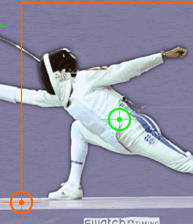
Some top fencers credit admiration for movie heroes -- such as Jedi masters or Errol Flynn -- for getting them into the sport. But in real life, fencing is so fast-paced that if you blink you could miss a touch.
Not only is something sharp coming at you, but you must stay on a 46-foot by 5-foot strip, also called the piste. The length of the strip allows fencers plenty of room to feignt or launch an attack. Hitting the piste with a weapon can incur a penalty.
Fencers are wired to have their touches registered. A wire hooked to a spring-loaded reel at the end of the strip goes through the back of their kevlar uniforms and up the arm to connect to the sword. A light goes on when a touch has been registered.
Foil, épée, and sabre are the three weapons, but different types of grips are used. Usually, a fencer focuses on one weapon. Sabre is the only weapon where a cut counts as well as a thrust. Foil and sabre are similar in length and weight. Épée is slightly heavier and stiffer.
Touches are in different areas for each weapon. In foil, fencers wear a lamé, covering an area similar to a one-piece bathing suit, which registers touches. In sabre, the target is from the waist to the top of the head. In épée a lamé is not worn as the entire body is a target.