




Overview
The NBA Finals, formerly known as the NBA World Championship Series, are contested at the end of the NBA playoffs every season to determine the winner of the league's championship. The series has been held every year since 1947, when it was the BAA Championship Series. The series determined the champion of what was then the Basketball Association of America from 1947-49, when the league merged with the National Basketball League to become the NBA.
Under the current format, the winners of the Eastern and Western Conference meet in a best-of-seven series with the team holding home-court advantage hosting the first two games and the last two games, if necessary. The team with the better regular-season record gets home-court advantage for the Finals. If the two teams posted the same regular-season record, then the first tiebreaker is head-to-head record. If they split their two meetings, the tiebreaker becomes conference record.
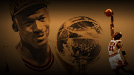
The winner of the NBA Finals receives the Larry O'Brien Championship Trophy. The current trophy was first awarded in 1978, and renamed after former NBA commissioner Larry O'Brien in 1984.
Under the current format, the winners of the Eastern and Western Conference meet in a best-of-seven series with the team holding home-court advantage hosting the first two games and the last two games, if necessary. The team with the better regular-season record gets home-court advantage for the Finals. If the two teams posted the same regular-season record, then the first tiebreaker is head-to-head record. If they split their two meetings, the tiebreaker becomes conference record.
The winner of the NBA Finals receives the Larry O'Brien Championship Trophy. The current trophy was first awarded in 1978, and renamed after former NBA commissioner Larry O'Brien in 1984.
1940s: Beginnings
The foundation of the Basketball Association of America brought professional basketball to a major national stage for the first time. In the early years of the league, teams that had played in other leagues before the formation of the BAA dominated play, winning two of the three championships awarded in the 1940s. This decade also saw the only championship ever won by a team that would eventually fold -- the 1948 Baltimore Bullets, who joined the league from the ABL, lasted just six more full seasons before folding 14 games into the 1954-55 season.
1950s: Bookend Dynasties
The league's first full decade began the way the previous one ended, with a championship by the Minneapolis Lakers. The Lakers dynasty, led by center George Mikan and coach John Kundla, dominated the early part of the decade, winning four championships in five seasons. The Lakers' run was interrupted only by the Rochester Royals, who won the only championship in their franchise history in 1951. The team, currently known as the Sacramento Kings, has yet to return to the Finals.
The end of the decade saw the emergence of Red Auerbach's Boston Celtics dynasty. After drafting Tom Heinsohn and trading for Bill Russell in 1956, Auerbach steered his Celtics to three consecutive Finals appearances to close out the 1950s, winning the title in 1957 and 1959.
The end of the decade saw the emergence of Red Auerbach's Boston Celtics dynasty. After drafting Tom Heinsohn and trading for Bill Russell in 1956, Auerbach steered his Celtics to three consecutive Finals appearances to close out the 1950s, winning the title in 1957 and 1959.
1960s: Celtics Domination
Auerbach's Celtics teams continued their run of success in the 1960s, cementing their status as one of the most successful dynasties in all of sports. Boston won nine of the 10 championships in the 1960s, failing to win only in 1967 when Wilt Chamberlain led the Philadelphia 76ers to the title.
Chamberlain was a key figure in the decade's most dynamic individual matchup, battling with Celtics center Bill Russell as both a member of the Warriors (in Philadelphia and San Francisco) and the 76ers.
The decade began with the Celtics wrapping up their rivalry with the St. Louis Hawks. The two teams, who met in the Finals twice in the 50s, played in both 1960 and 1961, with Boston winning each time.
The Celtics' most frequent opponent in the Finals during this decade was the Lakers, who had moved to Los Angeles since their meeting in the 1959 NBA Finals. Boston and Los Angeles met six times in a span of eight years in the 1960s, with the Celtics winning all six series. The last two meetings came with Russell serving as a player/coach, having replaced Auerbach after the 1966 Finals. Russell himself retired after the 1969 Finals.
Chamberlain was a key figure in the decade's most dynamic individual matchup, battling with Celtics center Bill Russell as both a member of the Warriors (in Philadelphia and San Francisco) and the 76ers.
The decade began with the Celtics wrapping up their rivalry with the St. Louis Hawks. The two teams, who met in the Finals twice in the 50s, played in both 1960 and 1961, with Boston winning each time.
The Celtics' most frequent opponent in the Finals during this decade was the Lakers, who had moved to Los Angeles since their meeting in the 1959 NBA Finals. Boston and Los Angeles met six times in a span of eight years in the 1960s, with the Celtics winning all six series. The last two meetings came with Russell serving as a player/coach, having replaced Auerbach after the 1966 Finals. Russell himself retired after the 1969 Finals.
1970s: Decade of Parity
With Auerbach and Russell no longer holding court in Boston, the league became wide open, with eight different teams winning championships in 10 seasons during the 1970s. The New York Knicks, who won the first championship of the post-Russell era, and the Celtics each won twice during the decade.
The Lakers finally broke through for their first title since the early '50s in 1972, winning 69 games in the regular season and defeating the New York Knicks in the Finals. The Knicks won the rematch a year later for their second title in the decade. Including the Knicks, six of the eight franchises who won a title in this decade have failed to win one since.
The league made history in 1975, when Al Attles led his Warriors against K.C. Jones' Bullets in the first championship series in the four major professional sports to feature two black head coaches.
The decade ended with the then-Washington Bullets (not the same franchise as the 1948 champion Baltimore Bullets) and the then-Seattle SuperSonics meeting in back-to-back series, with the Bullets winning in 1978 and the Sonics winning in 1979.
The Lakers finally broke through for their first title since the early '50s in 1972, winning 69 games in the regular season and defeating the New York Knicks in the Finals. The Knicks won the rematch a year later for their second title in the decade. Including the Knicks, six of the eight franchises who won a title in this decade have failed to win one since.
The league made history in 1975, when Al Attles led his Warriors against K.C. Jones' Bullets in the first championship series in the four major professional sports to feature two black head coaches.
The decade ended with the then-Washington Bullets (not the same franchise as the 1948 champion Baltimore Bullets) and the then-Seattle SuperSonics meeting in back-to-back series, with the Bullets winning in 1978 and the Sonics winning in 1979.
1980s: Bird vs. Magic
With popularity and ratings plummeting, the league needed a spark, and it got it in the form of Magic Johnson and Larry Bird, a pair of young stars who met in a memorable 1979 NCAA championship game. Johnson was the first one to break through for a championship in the NBA, teaming with Kareem Abdul-Jabbar to win as a rookie in 1980. Bird got his championship the next year, with Johnson coming back to win in 1982.
The run of Johnson/Bird titles was interrupted by the 76ers in 1983, but in 1984, the league finally got a matchup of the two dynamic superstars in the NBA Finals, with Bird leading his Celtics to a 7-game win over the Lakers, maintaining the status quo in the Celtics-Lakers rivalry. The Lakers finally figured out the Celtics the next year, and added another title over Boston in 1987.
When all was said and done, the Lakers and Celtics combined for eight titles in the 1980s, with Johnson leading the Lakers to five championships and Bird winning three with the Celtics.
The end of the decade saw the emergence of a new power in the East: the "Bad Boys" of the Detroit Pistons. After struggling to get past the Celtics, Detroit broke through in 1988, only to fall to the Lakers in the NBA Finals. The Pistons got their revenge a year later, closing out the decade with the first championship in franchise history.
The run of Johnson/Bird titles was interrupted by the 76ers in 1983, but in 1984, the league finally got a matchup of the two dynamic superstars in the NBA Finals, with Bird leading his Celtics to a 7-game win over the Lakers, maintaining the status quo in the Celtics-Lakers rivalry. The Lakers finally figured out the Celtics the next year, and added another title over Boston in 1987.
When all was said and done, the Lakers and Celtics combined for eight titles in the 1980s, with Johnson leading the Lakers to five championships and Bird winning three with the Celtics.
The end of the decade saw the emergence of a new power in the East: the "Bad Boys" of the Detroit Pistons. After struggling to get past the Celtics, Detroit broke through in 1988, only to fall to the Lakers in the NBA Finals. The Pistons got their revenge a year later, closing out the decade with the first championship in franchise history.
1990s: Jordan Rules
Detroit opened the 1990s with a successful defense of its title against the Portland Trail Blazers, but the real competition was coming from its own conference. After years of successfully holding off the Chicago Bulls in the playoffs -- much like the Celtics had done to the Pistons in the mid-80s -- the Pistons finally fell to Chicago in 1991, setting the stage for the NBA's greatest dynasty since the 1960s Celtics.
Chicago reached the NBA Finals for the first time in 1991, knocking off the defending champion Pistons in the conference finals, then dispatching five-time NBA champions Magic Johnson and his Lakers in the Finals. It was the first of three consecutive titles for the Bulls, who pulled off what Pat Riley couldn't in Los Angeles, a "three-peat."
However, after the 1993 Finals, Jordan retired, opening the door for another star from the 1984 draft to earn his championship rings. Hakeem Olajuwon led his Houston Rockets to their first title in 1994 and repeated in 1995 despite Jordan's return to the NBA in time for the playoffs. Jordan did not lead the Bulls to the Finals in 1995, losing to Shaquille O'Neal and the Magic, who in turn were swept by Houston in the Finals.
Coming off the disappointment of the 1995 playoffs, Jordan and the Bulls came back on a mission in the 1995-96 season, going 72-10 and winning the first of three more consecutive titles. After winning six championships in the decade, Jordan retired again after the 1998 Finals (and the NBA lockout that followed), as did head coach Phil Jackson. Scottie Pippen was traded to Houston, ending the Bulls' dynasty and making way for the San Antonio Spurs to win their first championship.
Chicago reached the NBA Finals for the first time in 1991, knocking off the defending champion Pistons in the conference finals, then dispatching five-time NBA champions Magic Johnson and his Lakers in the Finals. It was the first of three consecutive titles for the Bulls, who pulled off what Pat Riley couldn't in Los Angeles, a "three-peat."
However, after the 1993 Finals, Jordan retired, opening the door for another star from the 1984 draft to earn his championship rings. Hakeem Olajuwon led his Houston Rockets to their first title in 1994 and repeated in 1995 despite Jordan's return to the NBA in time for the playoffs. Jordan did not lead the Bulls to the Finals in 1995, losing to Shaquille O'Neal and the Magic, who in turn were swept by Houston in the Finals.
Coming off the disappointment of the 1995 playoffs, Jordan and the Bulls came back on a mission in the 1995-96 season, going 72-10 and winning the first of three more consecutive titles. After winning six championships in the decade, Jordan retired again after the 1998 Finals (and the NBA lockout that followed), as did head coach Phil Jackson. Scottie Pippen was traded to Houston, ending the Bulls' dynasty and making way for the San Antonio Spurs to win their first championship.
2000s: Shaq and Duncan
As the Finals moved into the new millennium, there was a familiar face leading the champions. Phil Jackson returned from his brief retirement to lead the Lakers to three consecutive championships to open the decade, this time leaning on center Shaquille O'Neal.
O'Neal's top nemesis in the Western Conference during the 2000s was Spurs center Tim Duncan, who had won the last Finals MVP award of the 1990s. Duncan led his team back to the top in 2003 and would win twice more, in 2005 and 2007. O'Neal returned to the Finals with the Lakers in 2004 but was upset by the Detroit Pistons. After that series, O'Neal was traded to the Miami Heat, whom he would help win a title in 2006, though Dwyane Wade was named the MVP of that series.
As the decade drew to a close, the league crowned a familiar champion. The Boston Celtics, who hadn't won the title since 1986, took home the championship in 2008, using a "Big Three" of Kevin Garnett, Paul Pierce and Ray Allen, defeating their old rivals the Los Angeles Lakers in six games. The Lakers came back the next season and defeated the Orlando Magic in five games, becoming the first team since 1989 to win a title the year after losing. It was their fourth title of the decade, the most of any team in the NBA.
O'Neal's top nemesis in the Western Conference during the 2000s was Spurs center Tim Duncan, who had won the last Finals MVP award of the 1990s. Duncan led his team back to the top in 2003 and would win twice more, in 2005 and 2007. O'Neal returned to the Finals with the Lakers in 2004 but was upset by the Detroit Pistons. After that series, O'Neal was traded to the Miami Heat, whom he would help win a title in 2006, though Dwyane Wade was named the MVP of that series.
As the decade drew to a close, the league crowned a familiar champion. The Boston Celtics, who hadn't won the title since 1986, took home the championship in 2008, using a "Big Three" of Kevin Garnett, Paul Pierce and Ray Allen, defeating their old rivals the Los Angeles Lakers in six games. The Lakers came back the next season and defeated the Orlando Magic in five games, becoming the first team since 1989 to win a title the year after losing. It was their fourth title of the decade, the most of any team in the NBA.
Larry O'Brien Championship Trophy
The winner of the NBA Finals gets the Larry O'Brien Championship Trophy, which replaced the original Walter A. Brown Trophy in 1978. The O'Brien Trophy originally retained the name of its predecessor, but was renamed after outgoing commissioner Larry O'Brien in 1984. The team that wins the championship gets permanent possession of the trophy, and a replacement is commissioned by the league.
The trophy, comprised of nearly sixteen pounds of sterling silver and vermeil (sterling silver with 24-karat gold overlay) and standing about two feet tall, is etched to resemble a basketball net. A single rod extends from the base to the ball, giving the appearance of a play in motion. The regulation size sterling silver and vermeil basketball rests along the rim of the net. The trophy is created each year in the Tiffany & Co. silver shop.
The trophy, comprised of nearly sixteen pounds of sterling silver and vermeil (sterling silver with 24-karat gold overlay) and standing about two feet tall, is etched to resemble a basketball net. A single rod extends from the base to the ball, giving the appearance of a play in motion. The regulation size sterling silver and vermeil basketball rests along the rim of the net. The trophy is created each year in the Tiffany & Co. silver shop.