LSU expects the best
Special to ESPN.com
When LSU's baseball team is winning, which has been most of the time in recent years, "you are the toast of the town," according to Tigers coach Paul Mainieri.
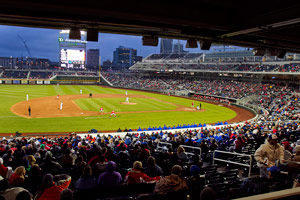
After all, LSU has led the NCAA in attendance 15 straight years, somehow averaging more than the 10,150 capacity of Alex Box Stadium. LSU is also the only team in NCAA history to exceed 400,000 in baseball attendance for a season.
"They drool over their athletic teams here," said Mainieri, who has seen the best of times in Baton Rouge, leading the Tigers to a national championship in 2009.
But Mainieri admitted his Tigers (24-14, 4-11 SEC) have "scuffled" a bit this season, getting swept by Florida and Arkansas and losing games to Louisiana-Lafayette, Northwestern State and Princeton. Of their past eight games, the Tigers have won only two.
"When we go through a tough streak, which everybody does -- it's baseball -- there's a vocal minority that will let you hear it," Mainieri said. "But I don't let it bother me.
"Look, I'm not complaining. I love it. The only thing worse than criticism is apathy."
Mainieri said his team has accomplished much since he arrived.
"I'm proud of what we've done here," he said. "In four years, we've won three SEC tournament titles and one national title. We've been ranked No. 1 in the nation in three of those years.
"Skip Bertman [LSU's coach from 1984 to 2001] would be the first to tell you that he set an unreasonable expectation here by winning five national titles in 10 years. Because of what he did, more teams decided to put increased financial resources into baseball."
The result has been increased competition, especially in the SEC, which boasts powers such as Vanderbilt, Florida and defending national champion South Carolina.
LSU star center fielder Mikie Mahtook, who was a standout freshman on the 2009 national champs, said the SEC is unique.
"You go on road trips, and there are 8,000-plus screaming fans out there ragging on you," said Mahtook, a projected first-rounder in this year's draft. "There are not too many conferences that have multiple 10,000-seat stadiums. "It's a special conference. Every weekend, you are facing guys who throw in the mid-90s."
Mainieri said it's "impossible to win as consistently as people want you to" and realizes his job is likely the most pressure-packed in college baseball.
It helps, though, having Mahtook on his side. The 6-foot-1, 190-pound junior, a native of Lafayette, La., was an athletic quarterback in high school and had offers to play college football as a receiver/ safety.
But Mahtook, who was the Florida Marlins' 39th-round pick in 2008, opted to concentrate on baseball. It's paying off. He had the go-ahead RBI in both games of the championship series against Texas in 2009 and spent last summer helping Team USA win a silver medal at the World University Championships in Tokyo.
His numbers have improved every year, from .316 with seven homers and 38 RBIs as a freshman to .335 with 14 homers and 50 RBIs as a sophomore. So far this year, he sports a .365 average, 10 homers and 36 RBIs.
But for the most part, the rest of the team is not yet living up to the high standards set by Mahtook and previous LSU teams.
"They expect the best," Mahtook said of LSU fans. "The minute you start slumping, they are quick to let you know you have to pick it up. That's a good thing. When we lose, it hurts them as much as it hurts us. Not too many college programs can say that about their fans."
Inside the new home of the College World Series
Special to ESPN.com
So now it's official. A new era of college baseball has begun, as Omaha's College World Series will move from the neighborhoods surrounding 13th Street and Bob Gibson Boulevard to a new downtown stadium, TD Ameritrade Park Omaha, which saw its first official action with Tuesday's Creighton-Nebraska game.
I got the chance to be there in the new mecca of college baseball, taking in all the pomp and circumstance that this stadium's price tag came with. It is impressive, for sure. But every venture such as this is up for debate on whether it's a good or bad thing. So here is my take on the new stadium, the real dirt on what I saw, good and bad.
The Good
1. The obvious one: room to roam. Everything is more spacious. There's more legroom in the rows, more aisle room and a nice, big concourse around the entire lower grandstand. It's quite the opposite of Rosenblatt, in which anyone over 6 feet left the stadium with bruised knees and people of all heights were vexed by the inch-by-inch death march on the single walkway in the middle of the stadium.
2. Heat relief. With the entire concourse being housed underneath the upper deck, there is plenty of room to escape the elements. It's especially helpful in the oppressive heat that used to overwhelm people in Rosenblatt, which provided very little shade.
3. Parking. Apparently the parking situation was well-received. Gone are the days in which you had to pay $20 to park to get blocked in, in someone's front yard. Then again, let's hold off our judgment until after the NCAA takes up a large part of the surrounding lots with booths, exhibits and the expansive fan zone.
4. Bathrooms. The restrooms are spacious, numerous and didn't have a single 50-deep waiting line for men or women. Now that's relief.
5. The views. Yes, we lose the iconic desert dome beyond right field, but the views of the towering buildings of downtown and the looming presence of the Qwest Center are nice additions to the experience.
The Bad
1. Too much like the circular stadiums of the '70s. Just as I suspected when I saw the original plans, this stadium reminds me of those circular, multipurpose stadiums such as the Oakland Coliseum and Riverfront Stadium. Because of that, there is a small prairie between the playing field and the stands. Even a front-row seat is significantly further from the action than Rosenblatt's cozy confines.
2. Concession lines. Even though there is more room to walk around the wide concourse, I found the food lines were so long they clogged up the concourse, negating all that space and reminding me of Rosenblatt once again. Hire more people between now and June.
3. The incline of the stands. There is very little slope to the stands. That means, if you happen to sit behind somebody tall, you could spend most of the game craning your neck around them to see home plate or the pitcher's mound.
4. The lot of land it sits on. The entire grounds of the stadium are jammed into one city block with very little walk-up room. In fact, the "Road To Omaha" statue is nearly sitting on a street corner behind home plate. That is not very conducive to large crowds amassed in front, trying to get a picture with it. Seems as if some surrounding streets could've been remapped and the stadium could've been pushed toward the Qwest Center about 300 feet or so.
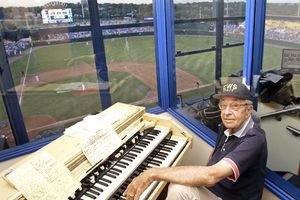
5. Of course, the charm. I'm not a big nostalgist or anything, but it will be a drag to see no ball girls trying to catch foul balls off the netting, no bullpens tucked down the foul lines and, most importantly, no Lambert Bartak tapping the keyboards between innings. Everything looks like a professional stadium, which can be good, but also bad.
ESPN's Mitch Sherman also attended the first game at TD Ameritrade Park Omaha. You can read his story here and see what fans had to say in the college baseball blog.
Places to be this weekend
Special to ESPN.com
If you're able to get your hands on your rich uncle's Learjet, here are the destinations you want to set your flight plan for this weekend.
1. No. 17 Oklahoma State at No. 7 Texas A&M
By the numbers:
OSU: 28-9, 10-5 Big 12, RPI No. 23
A&M 26-11, 11-4 Big 12, RPI No. 13
The Cowboys showed everyone this past weekend they had officially put to rest last year's last-place finish in the Big 12, while raising the giant flag that read "a legit contender" for this season. A weekend series win over their Bedlam rival Oklahoma Sooners has raised eyebrows across the country and the profile of the Pokes. Meanwhile, A&M is sticking its chest out chicken-hawk-style as it is now tied with Texas atop the Big 12, having not lost a weekend series all season. The Cowboys' Dane Phillips, the Big 12's leading hitter (.409 BA), takes on the conference's top pitching staff (2.27 ERA) in what should be a tasty matchup.
2. No. 9 Arizona State at No. 19 California
ASU: 25-9, 8-4 Pac-10, RPI No. 4
Cal: 24-9, 9-3 Pac-10, RPI No. 34
The Bears are on an uptick, winning five straight and sitting a half-game behind Pac 10-leading Oregon State. Cal's arms have continued to be the biggest factor in its climb up the rankings, led by Kevin Miller (4-2, 1.30) and Erik Johnson (5-1, 2.05). But this will be a significant challenge, as the Devils bring a dangerous lineup that hits .318 and steals bases (Pac-10-best 58 swiped) as easy as walks in the park. Cal catcher, Chadd Krist, you've been warned.
3. No. 20 UCLA at No. 26 Stanford
UCLA: 20-12, 9-3 Pac 10, RPI No. 59
Stanford: 17-12, 3-6 Pac 10, RPI No. 19
Don't look now, but the Bruins could just be finding an offense. Last Sunday, Beau Amaral had six RBIs in the win over Arizona, and on Tuesday they scored a season-high 14 runs in the win over San Diego State. Though the team is still hitting just .268, like ASU the Bruins like to get their feet moving, stealing 47 bases in 67 tries. At the opposite end of things, this youthful Cardinal team is starting to wear down, losing consecutive weekend series to USC and Oregon State.
Against the Beavers, SU scored just five runs and had 19 hits all weekend. But if the Bruins return to their notoriously weak offensive ways, the experienced Stanford mound corps should keep every game close. Unless Amaral can get some cohorts to join him in production, look for mostly 2-1 and 1-0 scores.
4. Alabama at No. 5 Florida
Watch: Saturday at 6 p.m. ET on ESPN2/ESPN3.com
Bama: 25-15, 8-7 SEC, RPI No. 41
UF: 29-7, 11-3 SEC, RPI No. 2
Oddly, this is the only real marquee showdown in the usually showdown-heavy SEC. The Tide is tied for first in the SEC West, and the Gators are just a game behind South Carolina in the SEC East. But there is certainly a wide chasm between the tops of the two divisions, with the Gators joining the Gamecocks and Vandy at the top of the national and RPI rankings and Bama going 3-7 in its last 10 games. The disparity is drastically exemplified in the feast-or-famine offenses.
Feast: The Gators lead the SEC with a .315 average.
Famine: The Tide have ebbed to the worst offense in the conference at .273. Nathan Kilcrease and that pitching staff can only hold them in games so long, ya know? Bama may gain some RPI points this weekend, regardless, but a No. 41 RPI is getting into sit-at-home-in-June territory.
5. No. 25 Stetson at Jacksonville
SU: 29-8, 12-3 A-Sun, RPI No. 22
JU: 23-13, 13-5 A-Sun, RPI No. 48
This Atlantic Sun matchup carries with it major implications in the conference standings and in the all-important RPI formula the NCAA uses. The Dolphins have some pretty good wins this season (series wins versus UNC Wilmington, East Tennessee State and Mercer) but still sit just outside of at-large consideration. That could all change this weekend with a series win at John Sessions Stadium, if Adam Brett Walker still has "meteors shooting off his bat" (great line from a JU press release). But beware the revenge factor here. Last year, the Hatters lost three of the four meetings with the Dolphins, including an elimination game in the A-Sun tournament to end their season. Don't you know the Hatters will turn into Mad Hatters when they try to right that wrong?
6. No. 24 Miami at No. 10 North Carolina
UM: 24-12, 13-4 ACC, RPI No. 24
UNC: 31-8, 12-6 ACC, RPI No. 5
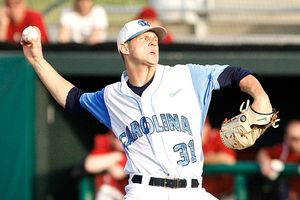
This is a perfect example of how much of a roller-coaster ride the college baseball season can be. After seeing Miami up close and personal in its loss to Rutgers on opening weekend, I came away thinking it was a mere shell of great Canes teams of yore. Meanwhile, the Tar Heels had an early-season win over Cal State Fullerton. But now, the fortunes have reversed. Miami has won 10 if its past 11 contests. Carolina? After last week's sweep at the hands of North Carolina State, Heels coach Mike Fox was quoted as saying, "I don't know what team I brought over here because it sure wasn't the same group of guys that played the first 36 games."
For the full weekend preview, check out the college baseball blog.
Eric Sorenson, who runs College Baseball Today, is a regular contributor to ESPN's college baseball coverage. Follow Eric on Twitter: @stitch_head
Follow ESPN.com's college sports coverage on Twitter @ESPN_College and on Facebook.
Hot and cold: RPI effect
A look at which teams benefited (and which didn't) in the pursuit of the golden ticket to the big dance. (Change in Ratings Power Index ranking from last week to this week in parentheses.)
Who's hot:
 1. No. 10 Oregon State (plus-8)
The Beavers (27-7, 8-1) didn't make a huge jump as far as raw numbers -- just eight spots -- but comparatively speaking it was a jump from No. 2 seed territory to the cusp of national-seed territory. See what sweeps of Arizona State and Stanford will do? Wow.
 2. No. 33 NC State (plus-21)
Speaking of a forehead-slapping result, where did this sweep of North Carolina come from? In the words of Al McGuire, "Holy mackerel! Holy mackerel!" The Pack (23-16, 8-10) goes to UVA this weekend.
 3. No. 49 Florida Atlantic (plus-38)
I've been impressed with the Owls (23-14, 10-5) since seeing them in the first week of the season, but they've still been under the radar. But a weekend sweep of ULM did wonders to get the Owls back in the discussion. A home weekend versus Troy looms in two weeks.
 4. No. 59 UCLA (plus-26)
It's still hard to believe the Bruins (20-12, 9-3) are still way, way out of at-large consideration, despite sitting just a half-game behind Oregon State for the Pac-10 lead. Beating Arizona two of three games and Long Beach midweek vaulted the Bruins closer to where they should be.
 5. No. 23 Oklahoma State (plus-12)
The Cowboys (28-9, 10-5) have come out of nowhere to put themselves in contention for a No. 1 seed, especially if they can take down Texas A&M this weekend. Even with a series loss, look for the Pokes to improve their lot in the RPI with a three-gamer in Aggieland this weekend.
Who's cold:
 1. No. 47 Kent State (minus-23)
Maaaaaan! Just when I was pumping up the Flashes (23-12, 9-3) and their RPI being in the upper-20s range, they go and lose two-of-three at Central Michigan. Oy vey! With weekends against Buffalo and Ohio coming up, it probably is going to get worse before it gets better.
 2. No. 43 Troy (minus-16)
A weekend loss at Middle Tennessee wasn't what the doctor ordered, as the Trojans (27-10, 11-4) took a giant shot to the solar plexus last week. But possible redemption is immediate. A huge series with Western Kentucky (No. 71), followed by a trip to Florida Atlantic (No. 49), is on deck.
 3. No. 51 UC Irvine (minus-10)
The Anteaters (24-9, 6-3) are still suffering from a weak nonconference slate and losing all three games at Gonzaga. So dropping 10 spots despite a series win at Pacific doesn't help. Prospects aren't looking good for improvement, as they'll take on UC Davis this weekend. That should put the Eaters way off the map for at-large consideration.
 4. No. 30 LSU (minus-9)
The Tigers (24-14, 4-11) are still well within at-large consideration, but this is a perfect example of how the RPI tends to overrate teams in the southeast. The Tigers aren't so good lately, losing to Auburn twice last weekend. Depending on how you look at it, the Vanderbilt series could be great for the RPI or horrible for the ego.
 5. No. 31 East Tennessee State (minus-9)
OK, doubters, haters and conspiracy theorists, here's your poster child team taking its long-awaited dive, though it's only nine spots. You have to wonder how LSU drops nine spots after losing two-of-three to Auburn and the Bucs (22-13, 11-8) drop the same amount after getting swept by Belmont. … Really? -- Eric Sorenson
Mid-major spotlight: South Alabama
 It's a transition year at South Alabama (20-16), but the Jaguars are suddenly hot, winning five games in a row and averaging 11.6 runs during the streak. The Jaguars hit .427 during a sweep of Sun Belt rival Arkansas Little Rock this past weekend. The Jaguars' turnaround is welcome news for coach Steve Kittrell, who is in his 28th year running the program at his alma mater. Kittrell, who is retiring after this season, has taken the Jaguars to the NCAA regionals 16 times. In six of those trips, the Jaguars were one win from the College World Series. Mark Calvin, South Alabama's associate head coach, will take over for Kittrell when the season ends. Calvin was the pitching coach for South Carolina last season, when the Gamecocks won their first national championship. He spent six years with South Carolina and 11 years as FIU's pitching coach. -- Walter Villa
Watch out for: St. John's
 As expected, Connecticut is at the top of the Big East standings at 10-2. But St. John's (19-13, 8-4) is making a case for being the league's second-best team. The Red Storm have made NCAA regional appearances in three of the past four years. This season, they have won three out of four Big East series, including sweeping 2010 NCAA tournament team Louisville this past weekend. The Red Storm's only series loss this season was a sweep at the hands of Connecticut. St. John's is led by shortstop Joe Panik, who is hitting .395, good for second in the league. Teammate Jeremy Baltz, who won Big East Rookie of the Year honors last season by hitting .396 with 24 homers and 85 RBIs, is not on that kind of pace this time around. But Baltz is hitting .311-2-37 and ranks among the league leaders in RBIs. -- Walter Villa
Q&A: Creighton's Ed Servais

That bright light you can see from the Russian Space Center is probably the beaming smile of Ed Servais, the head honcho of the Creighton Bluejays. The eighth-year commander of the Jays just saw his program peak into the national rankings (No. 28 in Collegiate Baseball's rankings) and the opening of TD Ameritrade Park, which will serve as the Jays new home field. I caught up with the chief benefactor of the upgrade on the eve of his team's first Missouri Valley Conference home series in the park against Southern Illinois. -- Eric Sorenson
Q: What kind of advantage does this stadium do for recruiting and being able to sell kids on playing in a major league-type park?
A: We've been talking about this place for quite a while, and now that the doors are actually open and we can bring people in here I think it's going to be a big boost for us. We've needed something. We've needed to get into a different field, and the university has given us this opportunity, and we plan on taking advantage of that.
Q: What are your thoughts on your team so far this season?
A: We've put ourselves in a good position now. We're 26-8, and it's not easy to do that. We've been on the road 23 times and have just 10 home games. But they deserve to get some recognition. It's hard to win 26 games at this stage of the season, especially with as many road games as they've played. I'm very impressed with how this team has carried themselves.
Q: What's been the key to the early success?
A: Our starting pitching on Friday and Saturday nights have been outstanding. Ty Blach and Jonas Dufek have been great so far and they're getting us deep into games, giving us seven to eight innings each time out. And I've really liked our bullpen. It's not been one or two guys, it's been more like five guys getting the job done there. And once again our defense has been special, fielding at a .980 clip. And I think, to be honest, with the new bats, I feel like the game has come back to teams like Creighton, those who emphasize pitching and defense. The game is geared more to our style. Although a lot of coaches might disagree with me, I think the bat change was great and fits our style perfectly.
Q: You guys set a defensive record a few years ago by having the best fielding percentage in the modern era. And beyond that you guys are always in the top five in the nation in defense. How do you guys do it every year?
A: You know what? We just try to simplify it. Our coaches put a heavy emphasis on throwing and catching. We don't spend as much time on situational stuff as most teams do. Every day at practice, we have a structured throwing program, nobody is on their own to get warmed up. And our young guys find out in a hurry that there's a lot of accountability in our defense and where to throw the ball. When you see us take infield, you'll never see a player throw the ball to a base. We always have him throwing to a cutoff man. You're just not going to see the outfield overthrow a base, it's not our game plan.
Q: What are your feelings about not playing in Rosenblatt anymore?
A: It was time. I think the college coaches that come in here in June are going to be really impressed. This place is much more fan-friendly. The concourses are open, and when people go to get food they're not going to miss a play. You could miss an entire half-inning at Rosenblatt. Every seat is a good seat. It's neat to see that the NCAA, along with Omaha, decided to go that route, because it was needed.
Q: Finally, what has this new stadium done for your nonconference scheduling? Are you getting more interest from big-time teams to come up here and play you guys?
A: Oh, definitely. In a year or so, you're going to see some big-time teams come up here and play some midweek games with us. Teams like we haven't been able to attract before. We're talking with Brian O'Connor and Virginia, since he's a Creighton alum. Brian actually wanted to come up here and open this stadium on the 13th, but it just didn't work out. Still, with this venue, you'll see us attract a lot of big teams that people are anxious to see play up here.
Capital One Cup
 The Capital One Cup rewards the best Division I men's and women's programs in the country for their on-the-field performance throughout the year. For more information about the Cup, visit capitalonecup.com.
Comments
You must be signed in to post a comment