Super Bowl
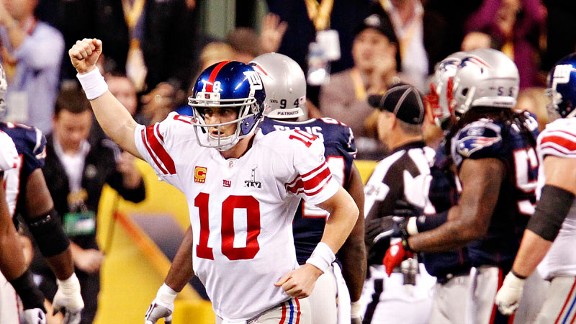
The Super Bowl is the championship game for the National Football League, pitting the top team from each of the NFL's conferences against each other. The Super Bowl is one of the biggest events in American culture -- the broadcast is almost always the most-watched program of the year, and Super Bowl Sunday has become a de facto national holiday.
The game features the winners of the AFC and NFC championship games, decided after a 16-game regular season and two rounds of playoff games. It has been played every year since 1967, started thanks to a merger between the NFL and its rival league, the American Football League.
Super Bowl XLVI, following the 2011 season, saw the New York Giants defeat the New England Patriots, 21-17. It was the second time in five seasons the Giants had beaten the Patriots in the Super Bowl.
The Super Bowl was created as part of the merger between the National and American football leagues, which had coexisted as rivals since the AFL came about in 1960. Due to fierce competition for players and fans, the leagues decided to merge in 1966, to become official in 1970.
The event's name was coined by Lamar Hunt, one of the AFL founders and Kansas City owner. He saw his children playing with a ball called the "Super Ball" and, playing off the college football bowl system, came up with Super Bowl to use as a filler before a name could be permanently decided on. The term stuck, though.
Early matchups
The first Super Bowl was held in 1967 (following the 1966 season) as a prequel to the new merged league, between the champions of the AFL and NFL, the Kansas City Chiefs and Green Bay Packers, respectively. That game was known as the World Championship Game, as were the next two (the name Super Bowl was used officially starting with Super Bowl IV, following the 1969 season).
Super Bowl I was the first -- and last -- Super Bowl not to sell out, filling only 61,496 seats in the Los Angeles Coliseum. Green Bay won that game 35-10 and won the second as well, beating the Oakland Raiders 33-14. The AFL got its first victory in Super Bowl III, when the Joe Namath-led New York Jets beat the heavily favored Baltimore Colts.
AFC dominance
After Green Bay and the NFL won the first two Super Bowls, the following years were dominated by the AFL/AFC. Namath earned the conference's first win in Super Bowl III and the Kansas City Chiefs its second a year later. After the league officially became part of the NFL later that year, it continued its dominance for the next decade. Only one NFC team in the 1970s won a championship, when the Dallas Cowboys won Super Bowls VI and XII.
The Miami Dolphins excelled in the early years of the decade. They reached the Super Bowl for the first time in 1972, losing to the Cowboys in Super Bowl VI. That loss led into the NFL's only undefeated season, when the Dolphins went 17-0 through the course of the 1972 season and Super Bowl VII, beating the Washington Redskins 14-7. The Dolphins repeated their conference title in the 1973 season, capping it with a win in Super Bowl VIII.
The second half of the decade was dominated by the Pittsburgh Steelers, who won four times in six seasons: Super Bowls IX, X, XII and XIV. Led by the "Steel Curtain" defense and quarterback Terry Bradshaw, the Steelers appeared in six AFC championship games during the 1970s, making the playoffs in eight consecutive years. The squad became the first (and only) team to win back-to-back Super Bowls on two different occasions.
The Oakland Raiders also won two titles for the AFC in the early years, Super Bowls XI and XV. The Raiders' second title, won following the 1980 season as the Los Angeles Raiders, would be the AFC's last championship for almost two decades.
NFC dominance in the 1980s
The tide turned following the 1981 season, when an NFC team other than the Cowboys won the Super Bowl for the first time since the late '60s. The San Francisco 49ers earned the honors, defeating the Cincinnati Bengals 26-21 in Super Bowl XVI. Over the next 16 years, the NFC won 15 titles -- the Los Angeles Raiders claiming the only AFC championship, in Super Bowl XVIII. The NFC won every title between the 1984 and 1996 seasons.
The 49ers' victory in Super Bowl XVI cemented the legacy of future Hall of Fame quarterback Joe Montana, who was named MVP three times and led his team to four titles: Super Bowls XVI, XIX, XXIII and XXIV. Montana and star receiver Jerry Rice were clinical throughout the 1980s, setting a standard for the decade's NFC domination. The 49ers' final win of the era, a 55-10 drubbing of the Denver Broncos, set a record for point differential in a Super Bowl.
The Washington Redskins also won two Super Bowls, XVII and XXII, and fellow NFC East squad New York Giants also took two titles, in Super Bowls XXI and XXV. The Redskins and the Giants entered the 1990s as the top squads, winning the Super Bowl in the first two seasons of the decade -- the Redskins' Super Bowl XXVI win was their third in nine years.
NFC success continues in 1990s
From there, another NFC East squad took control of the league -- the Dallas Cowboys became the predominant team of the mid-1990s with their first win following the 1992 season. In that win, Super Bowl XXVII, the Cowboys dominated the Buffalo Bills 52-17 behind young quarterback Troy Aikman, the game's MVP, and running back Emmitt Smith. The team won the next Super Bowl, XXVIII, as well as another title two years later, Super Bowl XXX -- the Cowboys' third championship in four years.
Super Bowl XXXI was significant in that it was the first championship for a player who would become a legend: Green Bay's Brett Favre. Favre had won his first MVP award the year before, and he won again after his Super Bowl-winning campaign in 1996.
The Packers reached the Super Bowl again following the 1997 season and were heavily favored to beat the Denver Broncos. But veteran quarterback John Elway had different ideas, and he rallied his team to a Super Bowl victory with a 31-24 win, starting a new streak in the process: the AFC would win nine of the next 13 title games.
AFC rises again
Elway and the Broncos earned their second title in Super Bowl XXXIII, handily beating the Atlanta Falcons. In a rare NFC win, the St. Louis Rams took the title in Super Bowl XXXIV, but that was followed by a drubbing by the Baltimore Ravens of the New York Giants in Super Bowl XXXV.
The New England Patriots became the next AFC squad to win the title in Super Bowl XXXVI, taking a close game over the St. Louis Rams 20-17. That began an era of New England dominance: The Patriots won three Super Bowls in four years starting with that title. After missing out on the title game in Super Bowl XXXVII (when the Tampa Bay Buccaneers beat the Oakland Raiders), the Patriots won close games in Super Bowl XXXVIII and XXXIX, cementing their dominance in the AFC.
The second half of the 2000s saw more parity return to the conference matchups: The AFC and NFC each won three titles through 2011. The Pittsburgh Steelers earned two of those three for the AFC -- in Super Bowls XL and XLIII -- meaning a record six championships for Pittsburgh. The Indianapolis Colts won the other title for the AFC in Super Bowl XLI, joining the Raiders as the only franchises to win titles in two different home cities. The New York Giants and the New Orleans Saints earned the NFC's titles in Super Bowls XLII and XLIV, respectively. The Green Bay Packers won the 2011 title, beating the Steelers in Super Bowl XLV.
The Super Bowl has become one of the most significant events in American culture, sporting or otherwise. It is watched by hundreds of millions of people worldwide and is the second-most watched sporting event across the globe, behind only the UEFA Champions League final. The broadcast numbers seem to grow every year, with the 2010 matchup between the New Orleans Saints and the Indianapolis Colts drawing an average audience of 106.5 million -- becoming the most-watched American television program in history.
The Super Bowl broadcast always sees some of the highest Nielsen ratings of the year -- the 1982 Super Bowl, between San Francisco and Cincinnati, remains one of the highest-rated programs of all time with a 49.1.
Commercials
Since the first Super Bowl, its commercials have been a huge part of the broadcast -- in 1967, when Green Bay and Kansas City played for the first title, NBC charged $37,500 for a 30-second slot, then a jaw-dropping sum. Now, a spot for the same amount of time costs nearer $3 million, and the commercials that air during the Super Bowl are planned and executed all year.
The "golden standard" for Super Bowl commercials was set in 1984, when Ridley Scott directed a commercial that introduced Apple's MacIntosh. The ad, in an ode to its airdate, was a tribute to George Orwell's "1984." For the first time, the idea was born that the advertising could be as important to the event as the main entertainment itself.
Since then, Super Bowl commercials have been a key part of the day's entertainment -- there is a chunk of the game's audience that watches solely for the commercials. Some of the more famous commercials airing during the game include the 1980 Coca-Cola ad featuring Mean Joe Green, and a 1993 spot featuring Michael Jordan and Larry Bird playing a game of H-O-R-S-E for a Big Mac.
Budweiser airs a commercial featuring its Clydesdale horses each year -- when they planned to remove the ad in 2010, a fan vote decided to include a Clydesdale ad once again. Budweiser -- along with other beer companies -- is one of the most prolific ad campaigns during the Super Bowl, running 10 ads in 2010. The Bud Bowl, the company's series of frog ads in the 1990s, as well as the "Whassup?" campaign, also were Super Bowl favorites.
Another popular and long-standing campaign comes from Walt Disney, which runs its "I'm going to Disney World!" ads each year. Featuring players (usually the MVP) from the previous year's game, the campaign is known by Disney as "What next?" assuming a broadcaster just asked the star "What are you going to do next?" The spot usually includes clips from the previous year's postgame as well as video of the player at Disney World fulfilling the promise. Phil Simms was the first player to say the tagline, after Super Bowl XXI.
Halftime shows
The Super Bowl halftime show has become a significant part of the broadcast, featuring current or past superstars in a concert at the game's midway point. Early Super Bowls featured local college or high school marching bands, but as the game's popularity grew, the acts became more high profile. Carol Channing was the first star to perform, in 1970, and she was joined by Ella Fitzgerald and Al Hirt two years later. Other than that, the game continued to host university bands throughout most of the 1970s and 1980s, before reaching the tradition of popular artists around 1990.
The shows occasionally are related to the venue or anniversary of the bowl, such as when Pete Fountain, Doug Kershaw and Irma Thomas performed when New Orleans held the bowl in 1990. Michael Jackson became the first -- and only -- solo artist to single-line the halftime show when he performed with 3,500 local children in 1993. The shows became more and more high-tech over the years, with Diana Ross leaving the stadium in a helicopter after a pyrotechnic show in 1996.
MTV produced the halftime show for the first time in 2001, when Aerosmith performed with a bevy of pop artists: *NSYNC, Britney Spears, Mary J. Blige and Nelly. U2 followed up that performance with a special Sept. 11 remembrance ceremony in 2002, when a list of names of those who died in the Twin Towers was played across the stage.
Controversy hit the halftime show in 2004, when MTV produced a performance featuring Justin Timberlake, Janet Jackson, P. Diddy, Kid Rock and Nelly. At the end of the number, Timberlake removed a piece of Jackson's shirt, revealing her breast with a sticker around her nipple. The cameras, which had been in close for the finale, quickly cut to a wide-angle shot and went to commercial. Timberlake and Jackson both deny the incident was intentional, claiming a "wardrobe malfunction." The NFL banned MTV from ever again producing a halftime show and the FCC fined CBS $550,000 for the incident (that was later reversed).
Since that incident, the NFL invited only classic rock groups -- the Rolling Stone, Bruce Springsteen and the E-Street Band, the Who -- to perform at the halftime show until 2011, when popular rap/pop group the Black Eyed Peas will perform.
The Super Bowl is held in a different NFL-franchise city each year. Miami (10 times), New Orleans (nine) and Los Angeles (seven) are the most frequent hosts, hosting a combined 26 of 44 games. The Super Bowl usually is held in a warm-weather stadium, due to its timing in February. It has been held in cold-weather stadiums three times -- Detroit twice and Minneapolis once -- and will be held in New Jersey in 2014.
Selection process
The NFL uses a bid process to select Super Bowl hosts, usually decided at least three years before the game. Bids include information on the hosting venue as well as upcoming stadium renovations, guaranteed revenues and other aspects that might benefit the league or the game. NFL owners vote to choose the site.
Year-by-Year Super Bowl Results
| Date | Winner | Loser | Score | Site | MVP | |
|---|---|---|---|---|---|---|
| XLVII | Feb. 3, 2013 | Ravens | 49ers | 34-31 | Superdome | Joe Flacco, BAL |
| XLVI | Feb. 5, 2012 | Giants | Patriots | 21-17 | Lucas Oil Stadium |
Eli Manning, NYG |
| XLV | Feb. 6, 2011 | Packers | Steelers | 28-25 | Cowboys Stadium |
Aaron Rodgers, GB |
| XLIV | Feb. 7, 2010 | Saints | Colts | 31-17 | Sun Life Stadium |
Drew Brees, NO |
| XLIII | Feb. 1, 2009 | Steelers | Cardinals | 27-23 | Raymond James Stadium |
Santonio Holmes, PIT |
| XLII | Feb. 3, 2008 | Giants | Patriots | 17-14 | University of Phoenix Stadium |
Eli Manning, NYG |
| XLI | Feb. 4, 2007 | Colts | Bears | 29-17 | Dolphin Stadium |
Peyton Manning, IND |
| XL | Feb. 5, 2006 | Steelers | Seahawks | 21-10 | Ford Field | Hines Ward, PIT |
| XXXIX | Feb. 6, 2005 | Patriots | Eagles | 24-21 | ALLTEL Stadium |
Deion Branch, NE |
| XXXVIII | Feb. 1, 2004 | Patriots | Panthers | 32-29 | Reliant Stadium |
Tom Brady, NE |
| XXXVII | Jan. 26, 2003 | Buccaneers | Raiders | 48-21 | Qualcomm Stadium |
Dexter Jackson, TB |
| XXXVI | Feb. 3, 2002 | Patriots | Rams | 20-17 | Louisiana Superdome |
Tom Brady, NE |
| XXXV | Jan. 28, 2001 | Ravens | Giants | 34-7 | Raymond James Stadium |
Ray Lewis, BAL |
| XXXIV | Jan. 30, 2000 | Rams | Titans | 23-16 | Georgia Dome |
Kurt Warner, STL |
| XXXIII | Jan. 31, 1999 | Broncos | Falcons | 34-19 | Pro Player Stadium |
John Elway, DEN |
| XXXII | Jan. 25, 1998 | Broncos | Packers | 31-24 | Qualcomm Stadium |
Terrell Davis, DEN |
| XXXI | Jan. 26, 1997 | Packers | Patriots | 35-21 | Louisiana Superdome |
Desmond Howard, GB |
| XXX | Jan. 28, 1996 | Cowboys | Steelers | 27-17 | Sun Devil Stadium |
Larry Brown, DAL |
| XXIX | Jan. 29, 1995 | 49ers | Chargers | 49-26 | Joe Robbie Stadium |
Steve Young, SF |
| XXVIII | Jan. 30, 1994 | Cowboys | Bills | 30-13 | Georgia Dome |
Emmitt Smith, DAL |
| XXVII | Jan. 31, 1993 | Cowboys | Bills | 52-17 | Rose Bowl | Troy Aikman, DAL |
| XXVI | Jan. 26, 1992 | Redskins | Bills | 37-24 | Metrodome | Mark Rypien, WSH |
| XXV | Jan. 27, 1991 | Giants | Bills | 20-19 | Tampa Stadium | Ottis Anderson, NYG |
| XXIV | Jan. 28, 1990 | 49ers | Broncos | 55-10 | Louisiana Superdome |
Joe Montana, SF |
| XXIII | Jan. 22, 1989 | 49ers | Bengals | 20-16 | Joe Robbie Stadium |
Jerry Rice, SF |
| XXII | Jan. 31, 1988 | Redskins | Broncos | 42-10 | Jack Murphy Stadium |
Doug Williams, WSH |
| XXI | Jan. 25, 1987 | Giants | Broncos | 39-20 | Rose Bowl | Phil Simms, NYG |
| XX | Jan. 26, 1986 | Bears | Patriots | 46-10 | Louisiana Superdome |
Richard Dent, CHI |
| XIX | Jan. 20, 1985 | 49ers | Doplhins | 38-16 | Stanford Stadium |
Joe Montana, SF |
| XVIII | Jan. 22, 1984 | Raiders | Redskins | 38-9 | Tampa Stadium | Marcus Allen, RAI |
| XVII | Jan. 30, 1983 | Redskins | Dolphins | 27-17 | Rose Bowl | John Riggins, WSH |
| XVI | Jan. 24, 1981 | 49ers | Bengals | 26-21 | Pontiac Silverdome |
Joe Montana, SF |
| XV | Jan. 25, 1981 | Raiders | Eagles | 27-10 | Louisiana Superdome |
Jim Plunkett, OAK |
| XIV | Jan. 20, 1980 | Steelers | Rams | 31-19 | Rose Bowl | Terry Bradshaw, PIT |
| XIII | Jan. 21, 1979 | Steelers | Cowboys | 35-31 | Orange Bowl | Terry Bradshaw, PIT |
| XII | Jan. 15, 1978 | Cowboys | Broncos | 27-10 | Louisiana Superdome |
Harvey Martin, DAL Randy White, DAL |
| XI | Jan. 9, 1977 | Raiders | Vikings | 32-14 | Rose Bowl | Fred Biletnikoff, OAK |
| X | Jan. 18, 1976 | Steelers | Cowboys | 21-17 | Orange Bowl | Lynn Swann, PIT |
| IX | Jan. 12, 1975 | Steelers | Vikings | 16-6 | Tulane Stadium | Franco Harris, PIT |
| VIII | Jan. 13, 1974 | Dolphins | Vikings | 24-7 | Rice Stadium | Larry Csonka, MIA |
| VII | Jan. 14, 1973 | Dolphins | Redskins | 14-7 | L.A. Memorial Coliseum |
Jake Scott, MIA |
| VI | Jan. 16, 1972 | Cowboys | Dolphins | 24-3 | Orange Bowl | Roger Staubach, DAL |
| V | Jan. 17, 1971 | Colts | Cowboys | 16-13 | Orange Bowl | Chuck Howley, DAL |
| IV | Jan. 11, 1970 | Chiefs | Vikings | 23-7 | Tulane Stadium | Len Dawson, KC |
| III | Jan. 12, 1969 | Jets | Colts | 16-7 | Orange Bowl | Joe Namath, NYJ |
| II | Jan. 14, 1968 | Packers | Raiders | 33-14 | Orange Bowl | Bart Starr, GB |
| I | Jan. 15, 1967 | Packers | Chiefs | 35-10 | L.A. Memorial Coliseum |
Bart Starr, GB |
A MOMENT IN TIME - SUPER BOWL XX
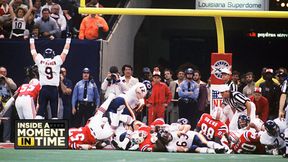
William Perry's iconic 1-yard touchdown plunge in Super Bowl XX 25 years ago, left a large but bittersweet imprint on NFL history. Moment in Time » '85 turns 25 » ESPNChicago.com »
A MOMENT IN TIME - SUPER BOWL XXXII
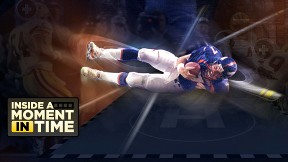
Who would have guessed a run would be John Elway's indelible Super Bowl moment? His "helicopter" ride in SB XXXII happens to be his favorite play, too. Moment in Time »
A MOMENT IN TIME - SUPER BOWL XLII
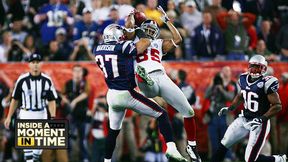
David Tyree's amazing snag in Super Bowl XLII spurred the Giants to victory and changed players' lives. Moment in Time » Tyree Recalls Catch » ESPNNewYork.com »
A MOMENT IN TIME - SUPER BOWL XLIII
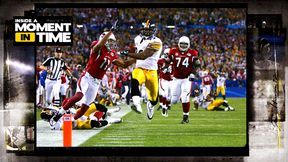
James Harrison was cut by the Steelers three times, but in Super Bowl XLIII, he turned the game around in just 100 yards. Moment in Time » SB XLIII Blog »
TOP STORY
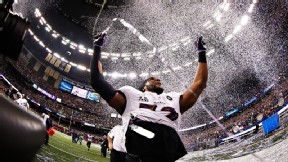
SUPER BOWL QUICK FACTS
Baltimore Ravens 34, San Francisco 49ers 31
 City: New Orleans
Venue: Mercedes-Benz Superdome
First played: Jan. 15, 1967
Most appearances: Cowboys/Steelers, 8
Most titles: Steelers, 6
SB XLVII champ: Baltimore Ravens
SB XLVII MVP: Joe Flacco
FUTURE SUPER BOWL VENUES
| Date | Stadium | City | |
|---|---|---|---|
| XLVIII | Feb. 2, 2014 | New Meadowlands Stadium | East Rutherford, N.J. |
| XLIX | Feb. 2015 | University of Phoenix Stadium | Glendale, Ariz. |
I AM A WORLD CHAMPION
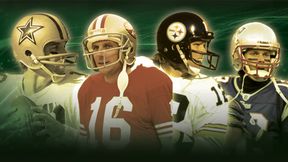
What does it take to be a Super Bowl-winning QB? Only 29 men have done it. Here are their championship stories, in their own words.
Super Bowl Quarterbacks »
45 YEARS OF SUPER BOWL RINGS
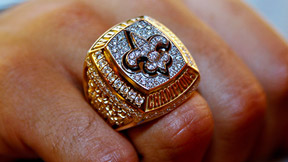
Every Super Bowl ring is unique, and tells a story of the team that won it. See all 45 championship rings, and read the stories behind them.
SB Rings » Mag: The Ring's the Thing »